Robert Biederman
  • Home
  • About
    • Contact
  • Marbles
    • TIP Time: Surviving on the Frontier
    • The Baja, the Condo Boardroom, and My ’79 Shovelhead
    • Dedicated to Emma: Open Adoption
    • Frontiers of the pain of parenthood
  • Condo/HOA
    • Professional Forum
  • Plato's Cave
  • The Ark
  • Trump Mythology
  • Depression, Bullying, Charity et. al.
  • Resources

Volunteerism:  The Peaks and the Valleys - The Future Governance

9/17/2014

0 Comments

 
There has long been a movement afoot that avows that board members responsible for a multi-million dollar piece of real estate ought to be responsible, trained, and paid.  The idea of leaving the proper running of your home up to a volunteer seems irrational.  Yet there is the prevailing practice that board members should be public-spirited citizens of the community willing to donate their time for the good of all.  Is this vision of a Mother Teresa for every community association practical?

Community associations were created in this country out of economic need: affordable housing for the masses that embraced the dream of home-ownership.  It was functional.  The economically motivated creation was followed by a “social experiment” ambience that offered us all a chance to recreate our own little communities and mini-governments.  As soon as the developer left, condominiums were embraced by society as a social phenomenon and one of the biggest hurdles faced was getting board members to refocus on the fact that they were running a small business.  Not just any small business, but one that was responsible for their own home as well as hundreds of neighborhood homes.  That struggle continues as newly elected board members are shocked to find out that they have something called “fiduciary” responsibility.  

Clearly the third stage of development for community associations is the move from social experiment back to a business orientation.  How does this evolution impact you, the board member?  As an unpaid volunteer fiduciary, the courts viewed your actions in the most lenient manner.  Board members were often found free of any personal liability for their poor decisions as long as they made some kind of reasonable effort to “do the right thing.”  They were not subject to the same criteria of business judgement that any paid staff person or executive might be held to.  Their public spirit was rewarded with a very liberal view from the bench insofar as liability went.  Certainly sounds appropriate.  Here you are volunteering 10-20 hours a month of your personal time for the good of the community and you end up getting sued for $2 million because the roofer you hired turned out to be a con-man.  Not really fair.  BUT.

Though you are not responsible, who pays the price? 

The entire association does.  Not a happy alternative.  Currently there is a legal trend emerging that says that board members will be held to the same “good business judgement” standards that other business executives are held to.  Volunteer status does not mitigate the burden they carry or their fiduciary responsibility. 

As this trend grows in popularity, would it not make sense to reevaluate the position of board members?  Will the trend reverse itself again? Possibly, but not probably.  The idea of holding individuals responsible for their actions is not a passing fad.  This evolution of the industry is likely to develop rapidly and probably reach an extreme situation where board members are frightened off because of all the personal judgements against them.  As things usually happen, the pendulum will shift back to a more middle-of-the-road position.  In any event, you should anticipate more board member liability.

The great social experiment of our era continues to mature.  Is it a social experiment, a business experiment or a hybrid?  “Governance” has become the mantra. The transitional nature of most boards is a major hurdle.

Should we anticipate the creation of the paid professionally trained board member?  Would you welcome the idea of one of your neighbors understanding the nuances of 3rd party contracts, property insurance, legal liabilities, and finance steering your neighborhood for a fee?  Would you then need a professional property manager?  Would we be creating a new career for retirees? Is this an opportunity for a young mother confined to the home because of child-rearing responsibilities to earn a legitimate income?  The opportunity to have professionally trained and experienced board members dealing with the needs of the community has to be a positive one.  Professional property managers need not worry.  There’s plenty of responsibility to go around.  

0 Comments

Breach of Fiduciary Responsibility?  You Be the Judge

9/17/2014

0 Comments

 
That question should be in the forefront of the mind of every board member. It’s not an easy one to answer. As a “fiduciary” you are spending your neighbors’ money and making decisions that have an effect on their property. You have a responsibility to act in good faith and act reasonably. 

Generally speaking, as an unpaid fiduciary, you don’t always have to be right. You don’t even have to be smart, but you can’t just ignore items that are brought to your attention. You have to exercise some level of business judgement. You can’t knowingly gamble with association funds or assets. When investing the reserve fund, the “Prudent Man” theory is often mentioned as a guideline. That concept states that the preservation of the capital is more important than getting the highest return.  

You’d also better stay away from what is called “self-dealing. That means that the association really should not be paying you for work you do for the association. When you are responsible for the work, and then also responsible for judging whether payment should be made, you put yourself in a conflict of interests that could be considered a breach of your fiduciary responsibility.   

Bringing personal agendas to the board meeting, and making decisions based on your own personal biases rather than what is right for the community is an area often pointed to as an opportunity for a breach of fiduciary responsibility.  If one board member doesn’t like his neighbor, and is shown to be selectively enforcing rules to harass that neighbor, then there might well be a case of breach. 

One has to wonder if the board members in Virginia and Florida that went to court over one of their resident’s right to fly an American Flag on a flagpole outside their home were exercising good judgement or representing the wishes of their constituents. Apparently their pursuit of these issues was not considered a breach of fiduciary duty, but many felt it was really bad judgement. 

What are the penalties for breach of fiduciary responsibility? That too is hard to define. How much does your D&O policy protect you? When doesn’t it protect you? Certainly if there are monetary damages involved, the board member might be held liable for them. Legal fees related to the defense of a charge of breaching fiduciary responsibility might rightfully be borne by the individual board member, not the association. Some D&O policies will pay for legal defense, but only if they believe the board member acted correctly. Insurance companies are there to protect you when you are right, not pay your legal bills when you’ve been wrong.

Here’s a little exercise for you from the real life chronicles of “Condo Man”. See if you can see where there may or may not be a “Breach”.

Once upon a time in a land not so far away (Framingham, Massachusetts) there existed a self-managed condominium. There is no professional property manager overseeing or guiding the actions of the board. In fact the community has been in existence since 1973 without such guidance. The board members rightfully feel quite proud of their efforts over the years. Their volunteer time is enormous and just as unappreciated as those communities that are professionally run and board member time is limited to the 2-hour monthly board meeting. These folks in Framingham put in ten times that amount of time and even more on occasion. Believe it or not, they’ve managed to stay out of any major trouble. They have well-respected legal counsel that they rarely call. They focus on saving money with the confidence that they’ve done it themselves for three decades and they can continue to do so. There is a reasonable constituency of investor units that are thought of darkly. Absentee owners are not appreciated here and renters get the same kind of prejudicial attitude you find in many communities.  Not necessarily justified, but a very real element of the environment. You can understand how a board member putting in 20-30 hours a month as an unpaid volunteer for the good of the community would feel about an absentee landlord who is actually making money as a result of the volunteer efforts of the board. It seems like one of life’s inequities, but it is reality. It is then certainly understandable that one of these hard-working self-sacrificing board members would not be very sympathetic to any problems that might occur in rental units.  It offers a very dangerous opportunity for board members to act in a way that tests their fiduciary responsibilities, because in fact they are fiduciaries for the absentee landlords as well as the owner occupants. Do they owe a different degree of responsibility to an absentee-owner?

Here’s the chronicle. You decide.

Absentee owner gets a letter in the mail stating that there is a sticky front door that is shared by him and his neighbor. The letter states that the owners must repair the door within 7 days or face a fine of $25/day each until it is repaired.  The letter is posted on a Friday of a holiday weekend, and as a result is not received by the homeowners until Tuesday with the following Friday being the deadline.

It’s important to note two things. First, the governing documents of the condominium specifically state that if there is a maintenance problem with this particular front door, the board will notify the two owners involved, give them 14 days to make the repair, and if it is not made, then make it themselves and charge back the appropriate owners for their share.  Second. The board member in charge of maintenance has had previous unhappy experience with the absentee-owner of one of the units and has stated that he does not enjoy managing rental units without getting paid.

Back to the story. The absentee-owner receives the letter Tuesday night, comes down to the property Wednesday to see what the problem is and finds the sticky door. He asks the maintenance man to fix it and bill him. The maintenance man refuses. He knocks on his neighbor’s door to see what help he can get. No answer. He tries to telephone the neighbor that night, but finds the number unlisted. He leaves a note for the board on Thursday explaining that he can’t get in touch with the neighbor to agree on a repair and the maintenance man has refused to help. With only one day left before the $50/day fines begin, he is looking for some immediate help. The board ignores the written message. The absentee-owner knocks on the neighbor’s door again with no result. He then contracts with an independent professional property manager to have the door repaired by a reputable company willing to come out and perform emergency service at a premium. Once the repair is completed in the mandated time period, he writes a letter of complaint to the board regarding their unfair deadline and non-cooperation. They write back with an apology saying they made an error and should have given the unit-owners 30 days to resolve the issue. The absentee owner had requested a telephone number for his neighbor from the board, but got no response. That request was made three more times over the next two months with no response from the board. Finally the board sent a letter telling the absentee owner that his neighbor was in jail and they couldn’t contact him either. They denied any responsibility for sharing in the cost of the repair. They told the absentee owner that he had to bear the full cost of the repair or work it out with his unavailable neighbor. 

Breach of fiduciary responsibility?  Extremely uncooperative attitude.  Deliberate breach of the provisions of the governing documents. Frustrating to the absentee owner who was inconvenienced in a pseudo-emergency of the board’s making and at risk for the entire cost of the repair that was performed. What did the absentee owner do? He decided that life was too short to make a big deal out of getting overcharged $150 and went about his business. Volunteer Board Members 1 - Absentee landlord 0.

Two months later in December, the same absentee landlord gets a call at 7:30am on a Sunday morning from his tenant. The basement is flooded and she’s afraid that the electric wires will blow up and that there will be mold and that the whole building will collapse. Twenty minutes later the absentee landlord is at the back door of the unit and goes down to inspect. Yes. There is a problem. Because the buildings contain eight units each with basements separated only by plywood paneling, the problem likely effects more than just the one unit. He calls the emergency number for maintenance for the condominium and gets the answering service. He reports the problem and asks for an immediate call back to see what can be done. After an hour of listening to the tenant rant and rave about her rugs and furniture being ruined and impending doom from short circuits and mold infestations, the landlord calls the emergency number again. The telephone answerer explains that she has passed the information on to the maintenance department with no response. After all, it is Sunday.

Waiting another hour for some support brings nothing. At 11am the absentee owner gets on the phone to contact a professional flood restoration company. The concern here is also that the problem is widespread and that just solving the problem in his unit will not really solve the problem. It’s a shared situation. By 1pm the emergency truck arrives, pulls right up to the back door to get their equipment hooked up immediately and start draining the basement. An hour later up wanders the board member who is head of maintenance and orders the emergency vehicle to get off the lawn. Parking on the lawn is clearly a rules infraction. It’s pointed out that there is an emergency situation going on and that the truck is involved in getting water out of a basement. This does not impress the board member. He announces that he is fining the unit owner and that if the truck does not move, he will have it towed.  The emergency people continue to do their job. The board member calls the maintenance man who responds within 20 minutes and is down to the property to call the tow truck to remove the emergency vehicle. By this time the flood remediation is done and the vehicle is removed. 

Here are a few points to ponder. How come an illegally parked car is enough of an emergency to get the maintenance man down to the property, but a flooded basement is not?

If the emergency vehicle must be towed because it is allegedly causing damage to the lawn on which it is parked, what kind of additional damage to that lawn might be created by a big 10-wheeled hydraulic lift tow truck climbing up on that same lawn and dragging the truck off?  Is the decision to call a tow truck a breach of fiduciary responsibility? Probably not, just poor judgement and there is no law against being stupid. Is ignoring a flooding basement a breach of fiduciary responsibility? Maybe if it was the board member who failed to respond, but the maintenance man is not a fiduciary. What can you say about the situation? Not much. Frustration and poor judgement comes with everyone’s life. The fact that this was the same absentee owner and the same board member involved in the sticky door incident might indicate a pattern. It might just be bad luck. Solve the flooded basement problem and move on. 

Not quite.  The absentee owner finds a note in his mail two weeks later fining him for the emergency vehicle and charging him for repairs made to the lawn and shrubbery around the unit. The fact that there is no shrubbery within 50 yards of the unit is the first tip-off that this is not exactly a legitimate bill. The idea of doing lawn repairs in December is another. Fining an emergency vehicle performing an emergency service that should rightfully have been addressed by the board is the third issue of concern. Fines are punitive, designed to punish people for doing bad things. Preventing damage to the building and neighbor units is not exactly a heinous crime. In fact, the non-response of the maintenance man is more in line for some kind of punitive response than the actions of the emergency crew. What does the absentee owner do? He pays the fine and the charges immediately, not wanting to make the situation worse. He writes a letter to the board explaining his feelings about the board’s responsibility and actions. He points out that there must be some mistake because there is no shrubbery and nobody in their right mind tries to make lawn repairs in the middle of the winter and what should have been done given the flood anyway? The board responds that the fine and charges stand. 

          Absentee owner smells a pattern here. He calls the attorney for the condominium and asks for some advice. The advice is to speak to the board and reason with them. The attorney can not get involved unless the board calls him.  Another request for redress by the board is ignored. The absentee owner decides that this pattern must be stopped. He files in small claims court. He also prevails upon the law firm used by the association to do a mediation of the situation at no cost to the association to put an end to what appears to be an escalating problem. The board ignores the request for mediation.

          Trial day comes up. The court clerk first offers official mediation done by the court. The board member refuses. The case is heard. The board member shows up with the maintenance man as his legal counsel. He testifies that the bill for the repairs was an error. They didn’t make any repairs. They just estimated what it might cost. He said the $80 charge was what the maintenance man charged them to come down on a Sunday to call the tow truck. In fact each one of the charges outlined on the bill to the absentee owner was incorrect. In fact he had even more pretend charges he had yet to send and he wasn’t done with this guy yet. The magistrate heard both sides and awarded the absentee owner a refund. The response of the board was to send another bill “they had forgotten to send” for almost double the amount the judge had just awarded the homeowner. 

          Breach of fiduciary responsibility?  There was no self-dealing here. The board members did not benefit financially from any of these actions. Their judgement in regard to the emergency vehicle is worth reviewing, but once again, stupidity is not illegal. The one thing they cannot do is ignore the court’s decision. They cannot go back after losing and insist they were right and try to coerce the absentee owner into paying again. Once again the absentee owner prevails upon the legal counsel for the condominium to offer a no-cost mediation hearing to try and resolve the issues. The response from the board is that they feel there is a conflict of interests and won’t participate.

          The absentee owner figures that this is not a good place for rental property owners and decides to sell his unit. The board will not issue a release, claiming fines are owed. The absentee owner loses his sale and sues the association for “lost opportunity” and after 2 years in court wins a judgement for $400,000 against the association. But should the individual unit owners be responsible for the special assessment of $15,000 each to pay for the judgement? Shouldn’t these board members be directly responsible for their actions that seemed to border on some kind of bad faith? False invoices and ignoring court judgements do not necessarily fall under the areas of protected actions. Are they not in breach of their fiduciary responsibility even though there was no self-dealing? Don’t they have an obligation to be reasonable? And what are the penalties if they are not?

          What would you have done?
0 Comments

Governance:  The Time Has Come

9/17/2014

0 Comments

 
“Governance”: Its time has come. Has yours?

It seems like an easy concept. It’s not. In theory, maybe. In practical pervasive application, not at all. Governance is simply the concept that allows community association board members to fulfill their fiduciary duty to their neighbors with a minimal amount of time spent at maximum efficiency. Simple enough.

 The job of the board member is not unlike a member of the Board of Selectman for a small town. Oversee the policies and planning. Leave the execution to the professionals. If the job is not being done satisfactorily, replace the professionals. There’s no need to get involved in micro-managing and doing the job yourself. When was the last time you saw a Selectman directing traffic because there was gridlock downtown, or teaching school because the SAT scores were falling behind the national average? You are a member of the Board of Directors, not a landscaper, lawyer or community manager. Just because your vendors aren’t performing as you hoped does not mean you should jump in and do it yourself. It doesn’t even mean that you need to get so involved as to fully understand their job so you can direct the new vendors in a more successful effort. That’s the community manager’s job. 

It sounds so simple. Actually nobody disagrees with the concept. Certainly not the community manager who just wants to do her or his job without a board member sitting on their shoulder. Certainly not the harried over-worked under experienced board member who just wants to be able to enjoy that second cup of decaf after dinner and not sit through another 4-hour board meeting. The vendors are the problem and the solution. Our problem is that as an industry we present an unavoidable temptation to the lazier unscrupulous vendor who knows they can win business by low-ball bidding. They do a terrible job, get fired, wait a few years till there’s a new board elected, go right back to the same property and do a poor job again. The professional community managers with experience get over-ruled in vendor selection by novice board members looking to be heroes by shaving $1,000 off a budget.

Well maybe, just maybe that is coming to an timely end. We’re sure going to try and make it happen by chatting with the most successful community managers in the country and finding out how they successfully implement varying forms of Governance in their diverse community association clients. One of the hallmarks of successful professional community management has been the flexibility to work with all kinds of boards. There are those run by demanding upper demographic professionals who establish high standards of performance, run their meetings themselves with the community manager as a bystander and call all the shots. There’s the community with a board of tired overworked volunteers who don’t know what they are doing, know that they don’t know, don’t want to know and just leave everything up to their community manager. When it comes to fiduciary duty, they kind of “phone it in” literally. Then there’s all you folks in between. So how can we establish guidelines to make this a successful survivable experience that you can look back at with fond memories? Watch this web site.

We’ll find out in the coming months as individual community managers share their specific experiences. We’ll look at all kinds of client boards in all kinds of different circumstances facing the varied challenges that you face, or will face, every month. We’ll look at how such complex and confusing jobs as roofing are handled with a minimum of board member time and confusion. Even the typical and usual repaint can become a nightmare if the board and manager are not working from the same theory of Governance. 

Rules enforcement, budgeting, insurance and even reserve funding can all be sailed through with pleasure, a sense of satisfaction and little conflict when the right community manager is working with a board that understands how proper Governance can get the job done and aggressive micro-management can sink any ship.

We can look forward to narratives from professionals from the Left Coast, the Right Coast and the Gulf Coast. We’ll discover the commonality that makes it all work properly regardless of the personalities involved. The land of “Fruits and Nuts” can operate just as effectively as the Elitists from the Northeast. Then they each migrate to the Sunshine State and deal not only with the hurricanes, but the “don’t buy green bananas” theory of management that can still survive within the proper and comfortable confines of good Governance.

Coming soon will be the first person words of the most respected community association in the country. You’ll get the view from the smaller community as well as the large master association that oversees thousands of homes. The board members will chime in too with their view of why it works and how it can get sabotaged. Look for the first installment next month.
0 Comments

Dispute Resolution in the Boardroom

9/17/2014

0 Comments

 
Picture
Conflict in the community association board room is a challenge.  We’ve probably spilled more ink on these pages relating to conflict resolution than we have on replacing a roof or selecting a landscaper. The reality is that roof replacement is inevitable, conflict is not.  Roof replacement and landscaping decisions are accepted responsibilities that are dealt with in a rational logical sequence.  Conflict in the boardroom is comparatively rare, yet when it occurs, all else fails.  Understand that conflict and its resolution is at the core of good community management.  Can we take another look and see if there is just one more lesson to be learned?

Simple things first. 

Unresolved conflict festers and carries over into other issues. Resolve it when it happens or face it again next month with some other non-related issue.  It only gets tougher to deal with as it ages.  

Recognize when there is a conflict and address it. Too often the biggest problem is that everybody has their dander up and nobody wants to do anything except be heard. Normally it would be said that it is the president’s responsibility to keep order and decorum.  What if the president is the one embroiled in the conflict? Then it becomes the responsibility of each individual board member to use maturity and rational thinking to first defuse the emotional situation and then help recognize that a conflict exists that requires resolution. Recognizing that there is a problem first and then identifying the problem may be about as much as these pages can offer today.  If so, it’s enough. 

Keep in mind that it’s not always necessary to announce that there’s a conflict. It’s not a bad idea, but sometimes it just fans the flames. Use your conflict defusing techniques with or without the announcement.

The problems themselves come in all shapes and sizes. Some are more frequent than others, but David Letterman’s List of Top Ten Community Association Management Problems might make for a good column next month. Today let’s deal with style and motivation. Leave substance for tomorrow once we understand the basics.

An essential ingredient of conflict is frustration. Frustration stems most often from a person feeling that their point of view is not being heard or not being seriously considered.  A first step in returning order to the board room is to identify that frustrated person, usually easy enough, and ask them to state their opinion as succinctly as they can. The first problem is that emotional people tend to be less than succinct. Many intelligent people with good ideas just don’t have the mental dexterity to organize their thoughts in a logical easy to understand way. It doesn’t mean their thoughts are worth any less. It doesn’t mean they’re stupid people. It just means they’re not great orators.  Some people just can’t dance. My mother-in-law can’t cook. We all have strengths and just a few weaknesses.  Help the poor communicator by being a good listener. It’s for everybody’s benefit.  It is your responsibility as a board member to have the patience to dig out the best of what is available. If an emotional person is having difficulty getting a thought out coherently, try to listen patiently and ask the right questions in a non-threatening way. Elicit the information you need to understand the point of view. There is a basic rule that we should all take to the bank. “We are each capable of positive and productive thought.  If it sounds dumb or irrational, work at it until you see the logic.” You may not agree with the position. It may be self-serving, vindictive, emotional, uninformed or downright dumb because the person has not taken the time to think it through.  You don’t have to agree. You do have to understand. 

Once you understand you have a second major challenge.  It could be the most difficult.  If you disagree with the position, you must agree with the person’s right to their thoughts and affirm the value of their contribution.  Why in the world would you want to affirm a vindictive stupid self-serving contribution? Because it is essential to clearing the emotional obstruction to doing the business of the board.  In the first place, your feeling that the thought may not be of great value is only your position. Others at the table may have a slightly different view.  Even if you’re all rolling your collective eyeballs at the absurdity of the position you still must affirm the person’s right to their thoughts and the right to express them without derision.  Argument, yes. Derision, no.  The stupider the thought, the more likely somebody is going to respond in an insulting way and the more likely the originator will feel frustrated and escalate the dispute.  

Listen to a position, understand it, affirm that you have understood it by asking non-threatening questions that demonstrate your candid interest in the position.  Thank the person sincerely for offering their thoughts and move on to another person’s position.  Once the source of the conflict has been satisfied that they have been heard, understood and respected, they must then show the same respect to the others at the table.  If not, throw the bastard out.   

0 Comments

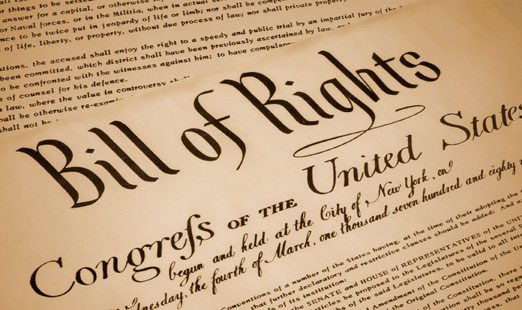
The Bill of Rights and Community Associations:  Life After Cappuccio

9/17/2014

0 Comments

 
Picture
A homeowner in Pennsylvania who also happened to be an attorney has made a dent in our collective consciousness in regard to the powers of the community association board.  Free speech was the issue. A “For Sale” sign was the focus.  You will read many other opinions about the future effects of this case.  Every lawyer across the country will be putting their thoughts in words.  Here’s the skinny.

It was previously considered acceptable that community association boards had the power to do just about anything that wasn’t illegal, immoral, or fattening.  It was also a matter of course that when you bought into a community association, you checked a large chunk of your personal freedom at the gated entry.  Most every condo I’ve heard of has a rule against “For Sale” signs.  The theory is that it cheapens the look of the neighborhood.  Not such an unreasonable judgment, unless you’re the unit owner trying to sell.  It clearly seems like a reasonable rule when you look at the ancient Greek standard for judgment of “the greater good for the greater number.”  Not so anymore.  It seems to be a clear violation of Free Speech. Community associations cannot abrogate constitutional rights even if the homeowners agree to give them up.  If that’s all there is to this issue, then it would be enough.  I think there’s more.

The consistent theme of this column is that community associations are a microcosm of our country and world.  The human interaction problems we face with our neighbors are the same ones faced by our governments.  The solutions to one should mirror the solutions to the other. I also remember a quote from a Nobel prize winner who said “For every great and complex problem someone will come up with a simple solution. And that solution is always wrong.”  Let’s not get too carried away with the  “For Sale” sign prohibition. Let’s look at the real issues.

We live by a document called The Constitution. We the people  and all that. The folks who wrote it were smart enough to realize that they were human and could make mistakes and also that 18th Century America might not have precisely the same needs as 21st Century America.  Therefore they put in an amendment process to allow for change.  This was such a good idea that they immediately recognized errors and omissions already made in the document while the ink was drying.  Thus we have the first ten amendments that most school kids know as The Bill of Rights..  Freedom of speech shows up pretty close to the beginning.  Now here’s the issue.  We recognize the possibility of error and have a process to deal with it.  We even recognize that we may make a change that doesn’t work and can go back and re-change it.  The best example would be the failed effort at prohibition.  Anybody who suggested we go back and amend The Bill of Rights. would be met with derision and hostility.  Those ten amendments have taken on a greater emotional importance than the whole Constitution;  something akin to the Ten Commandments. They have entered the realm of the politically holy.  

I think it is OK to take a second look at The Bill of Rights. .  I think it is OK to reexamine the rules about free speech.  I think that the idea of “shouting fire in a crowded theater” is not the only restriction to free speech.  I think that free speech in the form of lies should be dealt with in a more meaningful way than we currently are accustomed to.  At this writing a former LA policeman is picking potatoes peacefully in Idaho while the rest of the country chokes on their gorge after listening to his sworn testimony and follow-up interview tapes.  Freedom of speech is certainly integral to our whole country.  The abuse of that freedom is the core of the cancer that weakens us daily.  

This is not about a “For Sale” sign in Pennsylvania. This is not about the ammo that decision will give to the rabid Kondo Kommandos in Florida.  This is not about a Libertarian view of the world. It’s about the ability to examine ourselves with an open mind and see what’s wrong and then figure out how to fix it.  The throne of free speech is in the courtroom on the witness stand.  Its everyday realm is the schoolyard, the neighborhood and the workplace.  There must be more attention paid to the value of truth and a more significant penalty for lies.  It is not unlike the right to bear arms. Might as well get the NRA involved here.  They are right.  Guns don’t kill people.  People kill people.  It’s the consequences of an abused Bill of Rights that is the core of our problem.  We hold some thoughts in such unassailable esteem that we refuse to acknowledge that some facet of them may need improvement.  

If we focus that thought down to our own little industry of community associations and look at CAI, we see the same thing.  CAI is the biggest and best thing that has ever happened to our industry.  I don’t need to go through the litany of accomplishment here.  I’ve recruited over 100 individuals into the fold because I believe in it.  But it needs change.  It always has.  Just like any other organization.  When the areas for change are pointed out, the loyalists come out of the woodwork with contempt and disgust for any low-life that might suggest that the great organization is less than perfect.  They point to their many committees that are constantly reexamining themselves.  Unfortunately the self-examinations create little real change.  Let me close this paragraph with the clear statement that CAI is the best thing we’ve got in this country for the community association industry.  It just doesn’t move as quickly and as incisively as some of us would like.  CAI isn’t the point, just an example of “holier than thou” thinking that gets in the way of change.

Where do we go after “Cappuccio”?  We’d better get a dispute resolution system in place real quickly.  Florida will lead the way and California will be right behind.  The Northeast will lag a bit. It’s probably the cold weather.

Secondly, expect some broad reevaluation of the rights of board members to enforce rules and then the overall questioning of anybody to enforce rules.  What we have is the essence of our societal problems.  Rules are essential to living together.  The improper enforcement of those rules destroy that which we wish to preserve.  Just ask Marcia Clark.  

0 Comments

    Bob Biederman

    ....was the preeminent national publisher in the condominium/ HOA field where he was threatened with multiple lawsuits, defended one and fended off the rest. After establishing publishing offices in Massachusetts, New Hampshire, Florida and Southern California, he quietly sold his company for a dollar. Now this.

    Archives

    October 2014
    September 2014

    Categories

    All
    Board Members
    Dispute Resolution
    Governance
    Insurance
    Landscaping
    Pool Care
    Renting
    Reserves
    Roofing
    Rule Enforcement

    RSS Feed

Proudly powered by Weebly